

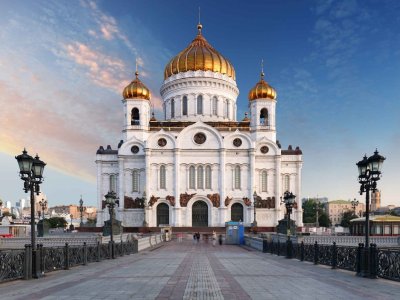
MOTHER RUSSIA
It’s not known who first said that history is written by the victors, but it is also written by the men. Those who interpret the Bible know there are alternative stories to be told from the perspectives of the women who occupy its fringes. These tales are often deeply buried and to reach them feels more like mining for oil than coal. Had women controlled the oral traditions, scripture’s human agency may have looked quite different. What is more surprising is the way even modern history is still told carelessly from the perspective of men.
Julia Ioffe, a Russian American journalist, born in Moscow to a professionally distinguished Jewish family at the end of the Brezhnev era and brought to America as the Gorbachev reforms died, has given us an invigorating feminist history of modern Russia from the Bolshevik revolution to the Putin regime in Motherland (William Collins 2025). This story is not deeply buried like oil, it lies on the surface for all to see; that no-one has chosen to write about it before like Ioffe is surprising.
Soviet communism was the butt of endless jokes from its citizens at the time and is reviled for its purges, repression and economic dysfunction, but in the first instance it liberated women from servitude in a way no system had done before. The record was far from perfect, but includes pioneers like Alexandra Kollontai, the first female cabinet minister in history anywhere, while Nadezhda Krupskaya, a Central Committee member from 1924 and heavy influencer of the education system, was as staunch an ideologue and revolutionary as her husband, Lenin.
Krupskaya also stood up to Stalin in the 1930s, a risk her elevated status did not protect her from (there are suggestions Krupskaya was ultimately poisoned by him). Stalin’s insane purges largely targeted men, simply because men still disproportionately made up the elites he was extinguishing, but women suffered torture and the Gulag too. The camps were full of pregnant women and children (by 1941, nearly ten thousand were incarcerated under the age of four) and sexual violence was rampant. Solzhenitsyn may be the recognised chronicler of the Gulag, but Eugenia Ginsburg’s Journey into the Whirlwind, published before Solzhenitsyn received the Nobel Prize for Literature, recounts her eighteen years in the camps and exile, giving the perspective of a woman. Meanwhile, women on the outside, deprived of any information of what had happened to their husbands when picked up by the NKVD, were left to raise children alone. When they were imprisoned by association, their children were often put into orphanages, never to see their parents again.
Ioffe makes a special point of underlining Lavrentiy Beria’s female victims. The NKVD boss, instigator of Stalin’s purges, was also guilty of heinous sexual crimes against women and girls; a wickedness often overlooked by male historians in their account of the era’s darkness.
The Great Patriotic War (1941-45) saw women fill roles in combat; Stalin formed three all-female air combat regiments and by the end of the war, women made up eight percent of all Soviet military personnel while other women staffed the factories that kept the Soviet war machine equipped. Perhaps the greatest fame lay with Lyudmila Pavlichenko, a highly skilled sniper who recorded 309 kills in her first year in uniform. Seizing on her notoriety, the Soviets sent Pavlichenko on fundraising tours of the United States, where she was treated in casually sexist ways she was unprepared for (‘in Russia, you would get a slap in the face for asking a question like that’ she snapped at one male journalist’s intrusive question).
Life became especially hard for women after the war. Millions had lost their husbands in battle, many more had to care for their disability, while raising families. Those who had not married were left with a shocking gender imbalance, making it difficult to marry and leading to arrangements where men would father babies by multiple women to meet their desire for children.
Women continued to be the intellectual equal of, or superior to, their political husbands. Nina Petrovna taught Marxism to her uneducated student, Nikita Khruschev, and subsequently married him. Raisa Gorbachev was more than equal to her husband, Mikhail, though her love, and grasp, of philosophy made for some excruciatingly awkward small talk with Nancy Reagan.
In the post-Soviet economic crash, women continued to suffer and make up for the shortfalls of their husbands, many of whom succumbed to deaths of despair. The Putin era has seen something different. His stylised machismo – bare chested and riding horses – is the stuff of western memes, but serves a purpose in Russia where Putin’s healthy, largely teetotal life appeals to Russian women in a way that might make the toes of western women curl. But there is also now a deep, reactionary chauvinism returning women to the servitude and dependency of Tsarist times. Some women may seek quiet, domestic lives after decades of female ancestors turning in double shifts compared to men, but the relaxation of laws round domestic violence also permit aggression and dominance that cohere helpfully with the broader political culture.
Western feminists have not always understood their Russian sisters. When Pussy Riot shot to fame after their punk stunt in the Cathedral of Christ the Saviour, they were criticised in the west for not making abortion rights a theme of their radical feminism, even though these rights had existed in very permissive laws from early Soviet times.
Ioffe, who weaves the story of her own family movingly into the narrative, draws her history to a close with Yulia Navalnaya, widow of Alexei. Before his murder in prison, Alexei Navalny said that when the history of dissidence in the Putin era is finally written, it is women who will be seen to have played the leading role. Yulia Navalnaya, refusing tears at her husband’s death because she would not give the Kremlin the satisfaction and Anna Politkovskaya, returning time and again as a journalist to Chechnya despite credible death threats, share something in common other than gender and astonishing courage. Anna and Yulia have been inspired by a shared Christian faith. There is a theme here which could include men like Vladimir Kara-Murza and Alexei Navalny. It is independent, dissenting Christian conscience that shines a light which structured religion has not in modern Russia. The prophetic is personal – and frequently female.
POPULAR ARTICLES
The Lost Art Of Listening
The skill we need the most is the one we are rapidly

Common Humanity Politics
Of all the subjects to weigh in on, free speech in US universities provokes perhaps the most fervid

Black Dog
What can the Church can do to help transform the mental health of a current generation of children